The Shift from Task Automation to Workflow Autonomy
For the past decade, businesses have been automating individual tasks: a chatbot answers FAQs, an algorithm sorts emails, a script generates reports. These are valuable improvements, but they still require human orchestration. Someone has to connect the dots, monitor outputs, and decide what happens next.
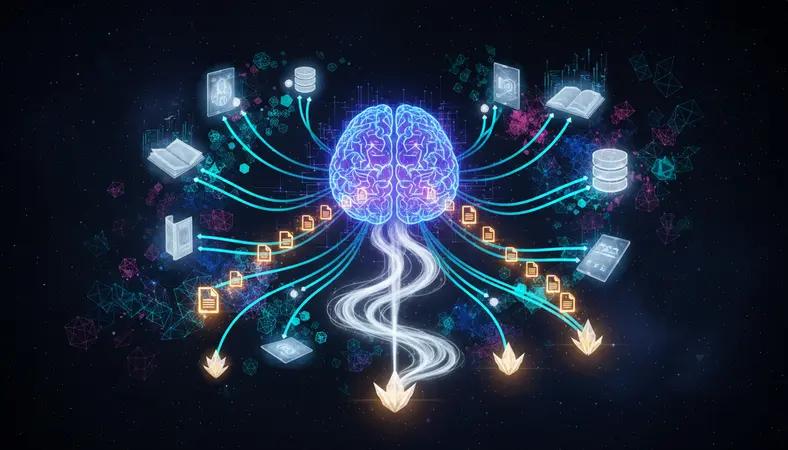
Agentic AI changes that equation entirely. Instead of automating a single step in a process, agentic systems take ownership of entire workflows from start to finish. They observe, plan, execute, evaluate, and iterate — all without waiting for a human to push the next button.
What Makes AI "Agentic"?
The term "agentic" refers to AI systems that exhibit agency — the ability to act independently toward a goal. Unlike traditional automation that follows rigid, predefined rules, agentic AI systems share several defining characteristics:
- Goal-oriented reasoning: They understand what success looks like and plan steps to achieve it, adapting their approach when obstacles arise.
- Tool usage: They can call APIs, query databases, browse the web, write code, and interact with other software systems as needed to accomplish their objective.
- Memory and context: They maintain awareness of previous interactions, accumulated data, and evolving context across long-running processes.
- Self-evaluation: They assess the quality of their own output and decide whether to refine, retry, or escalate to a human.
- Multi-step planning: They decompose complex goals into subtasks, execute them in the right order, and handle dependencies between steps.
A Concrete Example: AI-Driven Lead Qualification
Consider a traditional sales workflow. A lead fills out a form, a sales rep reviews it, researches the company, scores the lead, drafts a personalized email, sends it, and schedules a follow-up. This involves at least six distinct steps across multiple tools.
An agentic AI system handles this entire sequence. It receives the form submission, researches the company using public data, scores the lead against your ideal customer profile, drafts a contextual outreach email, sends it through your email platform, and schedules the follow-up — all in minutes rather than hours or days.
The difference between automation and agentic AI is the difference between a thermostat and an architect. One reacts to conditions; the other designs outcomes.
Why This Matters for Business Leaders
The implications for organizations are profound. Agentic AI does not simply make existing workers faster — it fundamentally restructures how work gets done. Here is what business leaders should understand:
1. Entire Roles Will Be Redesigned
When an AI agent can handle a complete workflow, the humans previously responsible for that workflow shift from execution to oversight. A marketing coordinator who used to spend 30 hours a week managing content calendars, drafting posts, and scheduling publications becomes a strategist who sets goals, reviews AI-generated content, and focuses on creative direction.
2. Speed Becomes a Competitive Advantage
Agentic systems operate 24/7 and execute workflows in minutes that previously took days. A competitor using agentic AI for proposal generation can respond to RFPs in hours while your team takes a week. That speed gap compounds quickly in competitive markets.
3. The Cost of Coordination Drops to Near Zero
One of the hidden costs in any organization is coordination — the meetings, handoffs, status updates, and approvals that keep work moving between people and teams. Agentic AI eliminates most of this overhead because a single system manages the entire flow without needing to hand work between departments.
Where Agentic AI Is Already Working
This is not theoretical. Companies are deploying agentic AI systems today across several high-impact areas:
- Customer onboarding: AI agents that collect documents, verify identities, configure accounts, send welcome sequences, and schedule kickoff calls — end to end.
- Financial operations: Systems that process invoices, match them to purchase orders, flag discrepancies, route for approval, and execute payments autonomously.
- IT support: AI agents that triage tickets, diagnose issues, apply known fixes, escalate complex problems, and close resolved tickets — reducing resolution times by 80%.
- Content production: Pipelines that research topics, write drafts, generate images, optimize for SEO, schedule publishing, and promote across social channels without human intervention.
How to Prepare Your Organization
Adopting agentic AI requires more than just buying new software. It requires rethinking how you organize work. Here is a practical framework:
Step 1: Map Your Workflows, Not Just Your Tasks
Most companies have documented individual tasks but not the full workflows that connect them. Start by mapping end-to-end processes across departments, identifying every step, handoff, decision point, and tool involved.
Step 2: Identify High-Value, High-Volume Workflows
Not every workflow is a candidate for agentic AI. Focus on processes that are repeated frequently, involve significant coordination overhead, and have clear success criteria. These are the workflows where agentic AI delivers the fastest ROI.
Step 3: Build Guardrails, Not Cages
Effective agentic AI deployments include human oversight at critical decision points without micromanaging every step. Define escalation triggers, approval thresholds, and quality gates that give the AI freedom to operate while keeping humans informed and in control of high-stakes decisions.
Step 4: Start Small, Scale Fast
Pick one workflow, deploy an agentic solution, measure the results, and iterate. Once you prove the model works, expanding to additional workflows becomes significantly easier because the organizational muscle memory is already in place.
Companies that master agentic AI will not just be more efficient — they will operate at a fundamentally different speed and scale than their competitors.
The Bottom Line
Agentic AI represents the most significant shift in business technology since the cloud. It moves AI from being a tool that helps workers do their jobs to being a system that does entire jobs under human supervision. The organizations that recognize this shift and act on it now will build an operational advantage that will be very difficult for latecomers to close.
The question is no longer whether AI can handle individual tasks. It is whether your business is structured to let AI handle entire workflows — and whether you are ready to redesign your organization around that capability.