
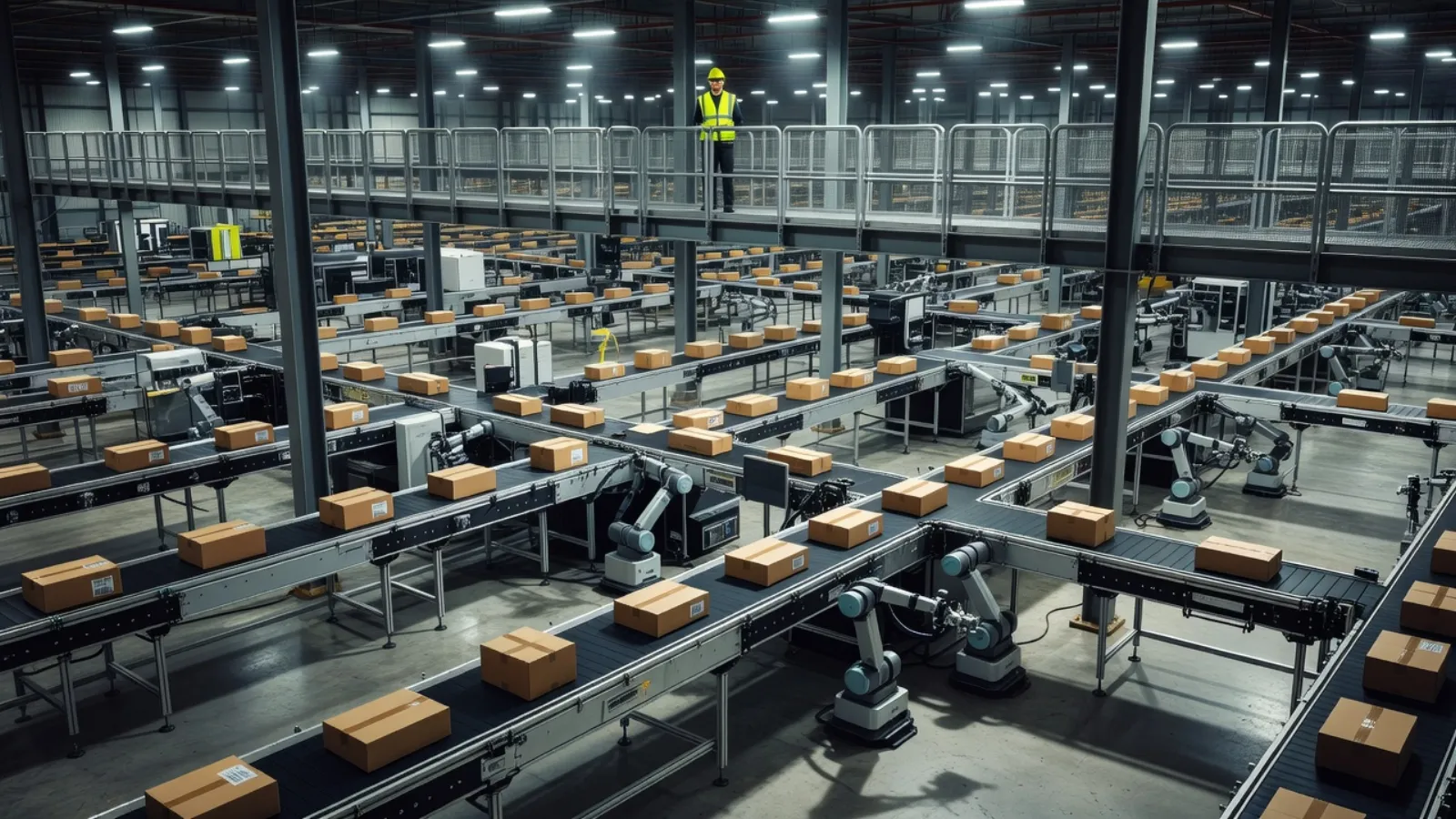
Logistics & Retail
Replenishment, fulfillment, carrier and customer operations running at volume without proportional headcount.
Retail and logistics operations are high volume and thin margin, which makes manual handling expensive twice over: it costs labor, and it slows the decisions that protect service levels. The work is repetitive and rule-driven, which is exactly what automation is good at.
We automate the flow from demand signal to delivered order: replenishment proposals from real sell-through, order and stock exceptions resolved against your rules, carrier selection and tracking, returns processed end to end, and customer contact answered around the clock by agents that can actually look things up and act.
Where the manual work sits today
- Replenishment decided from static minimums instead of live demand
- Order, stock and address exceptions worked one by one in a shared inbox
- Carrier selection, booking and tracking handled manually per shipment
- Returns and claims processed by hand across three systems
- Contact volume that scales with orders, so service costs scale with growth
Programs we run in logistics & retail
Demand-driven replenishment
Purchase and transfer proposals generated from sell-through, lead times and service targets, with buyers approving exceptions only.
Order and fulfillment exceptions
Held, short, mismatched and failed orders diagnosed and resolved automatically against your rules.
Carrier and transport operations
Rate shopping, booking, label generation, tracking and proactive delay notification without manual steps.
Returns and claims
Return authorization, inspection routing, refund or replacement and carrier claims handled end to end.
24/7 customer contact
Voice, chat and email agents that check orders, change addresses, process returns and escalate with full context.
What changes for the business
- Service levels held without adding planners or agents
- Exceptions resolved in minutes instead of at end of day
- Working capital released from stock that was covering manual delay
- Peak seasons absorbed without temporary staffing
Systems we typically connect
Questions we hear in logistics & retail
No. Buyers set the policy and approve what falls outside it. The system removes the routine reorders, which are usually the large majority of the lines.
Capacity is not the constraint that it is with people, so peak is a rules question rather than a staffing one. We test peak behavior before the season, not during it.
No. We integrate with what you run and automate the decisions and handoffs between those systems.
Price it for your operation
Pre-filled with figures typical of this sector. Replace every one of them with yours.
What one fulfilment process costs you
One repetitive process — orders, replenishment lines or carrier bookings — priced end to end.
Labour only. It does not count the rework, the late payments or the customers who left while the queue moved. Runs on 46 working weeks and 1,800 productive hours per person per year. It is an estimate from your own figures, not a quote.
Send these numbers with an assessment requestSee what would come off your desks in logistics & retail
Confidential assessment led by senior engineers. No obligation.