
Supply Chain & Operations Automation
Demand, inventory, purchasing, scheduling and logistics decisions executed by systems, not spreadsheets.
Operations run on decisions made many times a day: what to order, when to produce, how to route, whom to schedule. We move those decisions into systems that use live data and your rules, and let people manage exceptions and strategy.
We integrate ERP, WMS, MES, carrier and supplier systems and build the decision layer on top: forecasts, replenishment, purchase orders, production and workforce schedules, shipment tracking and quality workflows, all executed automatically with clear escalation when reality departs from plan.
What we take off your people's desks
- Demand forecasting and replenishment
- Purchase order creation, confirmation and expediting
- Production and workforce scheduling
- Shipment booking, tracking and exception alerts
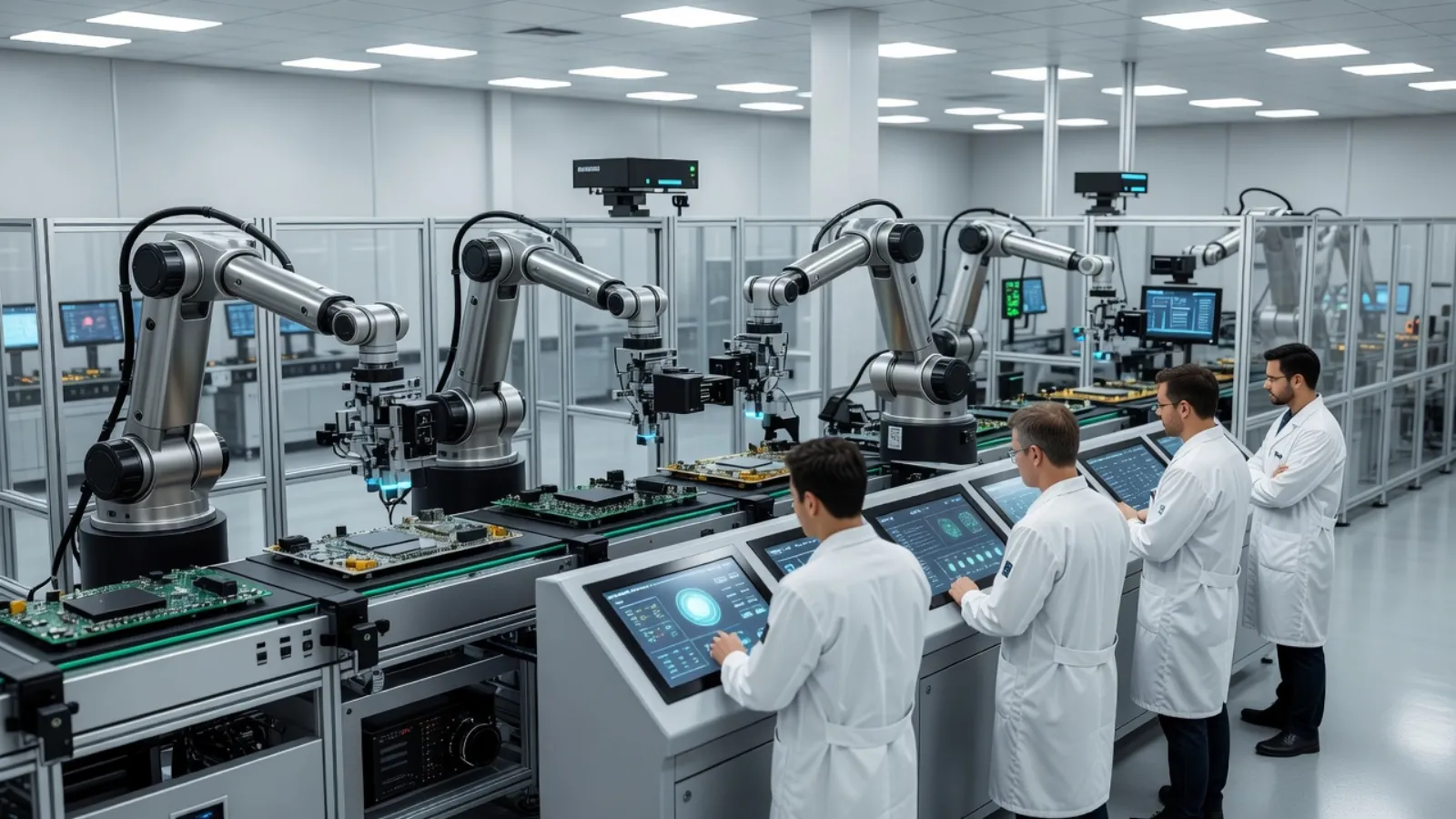
- Quality inspections with vision and sensor data
- Supplier communication and document exchange
How we deliver it
Operations diagnostic
We map the decisions, data sources and systems in your operation and quantify stock-outs, overstock, delays and manual effort.
Decision design
Forecasting, replenishment and scheduling logic is designed with your planners and validated on historical data.
Integration
ERP, WMS, MES, carriers and suppliers are connected so decisions execute as transactions, not recommendations in a spreadsheet.
Operate and improve
We monitor service levels, inventory and schedule adherence and refine the models with your teams.
What changes for the business
- Fewer stock-outs and less working capital in inventory
- Purchasing and scheduling without manual rekeying
- Real-time visibility of orders and shipments
- Planners focused on exceptions and strategy
Typical programs
Distribution replenishment
Store and warehouse orders generated from forecasts and constraints daily.
Manufacturing scheduling
Production plans regenerated as orders, materials and capacity change.
Logistics control tower
Shipments booked, tracked and re-routed with automatic customer updates.
Automated quality
Vision systems inspecting output and triggering holds and rework workflows.
Platforms and technology
Questions we hear from operations and finance leaders
No. We build on what you run and integrate; replacing core systems is never a prerequisite.
Data cleansing and master-data rules are part of the program; decisions only execute on data that passes validation.
Forecasts drive decisions within guardrails you set; deviations trigger exceptions and the models are recalibrated continuously.
Yes. Programs are designed per site with shared logic and governance, and rolled out in sequence.
What this is worth in your operation
Your volumes, your rates, your call on how much a system should take. Nothing is sent to us.
What manual planning costs
Replenishment, purchasing, scheduling and allocation decisions made in spreadsheets, plus what it costs when one of them is late.
Expedites avoided are scaled by the same automation share, which is conservative: earlier decisions usually cut late shipments by more than they cut planning hours. Inventory held because forecasting is manual is not counted. Runs on 46 working weeks and 1,800 productive hours per person per year. It is an estimate from your own figures, not a quote.
Send these numbers with an assessment requestSee what supply chain & operations would remove from your operation
Confidential assessment led by senior engineers. No obligation.